Orkut- What Went Wrong?

http://www.logos.wikia.com

By Jeff St. Jean

Published July 19, 2019

“My dream was to connect all the Internet users so they can relate to each other. It can make such a difference in people’s lives” 

                   -Orkut Buyukkokten

What was Orkut?

Orkut was a social networking site that was owned by Google and named after its’ creator Orkut Büyükkökten.  It was similar to other social media sites in that its’ purpose was to allow users to connect with each other through communities and keyword searches.

Orkut was launched in 2004 and dominated the Brazilian market for 7 years before shutting down in 2014.  What happened that it shutdown so suddenly?

http://www.dailymail.com

Orkut’s Popularity

Because of Google’s strong reputation, people were enticed to try out Orkut. The platform was especially popular with technology workers and students because it allowed them to connect to classmates, co-workers,  as well as high profile personalities.  (Mahoney, 2017).  The platform was easy to use, which in turn made it easy for users to join communities
Initial membership was by invitation only.  We know that exclusivity drives up demand, people seem to want what they can’t have. Being a member of Orkut meant users were well connected in the technology world.                    

Orkut was a great social media platform that grew, especially outside of the United States.  Although initially they had some success in America, Orkut had great popularity within Brazil and India.  Within a year of launching Orkut established over 1.5 million communities and reached its peak of popularity in 2012 with 30 million users. (Mahoney, 2017). 

Brazilian Success

Brazil has emerged as one of the strongest markets for online retailers, with 77% of the users having a positive image of online shopping.  In fact, they rank fifth in the world. Even more astounding is the fact that cellphones outnumber people (Mahoney, 2017).
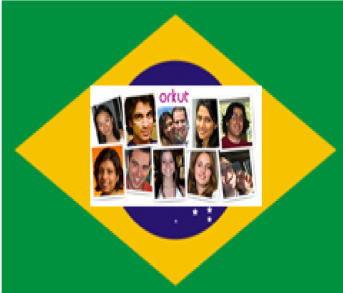
Outdoor advertising is banned in Brazil and this increased online marketing. Brazilians embrace social media and digital technology. In fact, an astounding four-fifths of the social media users in Brazil use networking sites to research products. 

Brazilians embraced Orkut and they alone accessed 90% of the page views in Orkut.  Online videos are a marketing tool that the Brazilians use and trust.  Brands must incorporate this strategy into their marketing mix.  Orkut was unable to support this function and the Brazilians began to seek out other platforms that could meet their needs.

Where did Orkut Fall Short?

Source: http://www.businesscloud.co.uk

Once Facebook emerged on the scene, it gained global dominance and Orkut never really caught up. Orkut was a great idea that failed because they neglected to meet the needs of their audience.  Plain and simple, they didn’t listen to what their users wanted. 

Orkut had functionality issues that included:

  • Inability to handle video content- very important to Brazilians
  • Blockages
  • Limited to the number of friends allowed
  • Difficulty sharing and unloading pictures
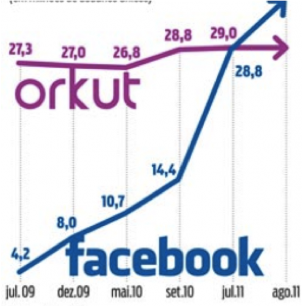
Orkut stopped meeting the needs of its’ users and as a result lost their consumers.  They were replaced by other social media platforms like Facebook. 

Key Takeaways

Even though Orkut failed to evolve, they did a great job of giving users what they needed for a period of time.  They created a word-of-mouth system whereby consumers could recommend products to others. Word-of-mouth marketing is one of the strongest forms of marketing techniques. We are more apt to buy a product based on recommendations from people we trust. 

Had Orkut taken the time to monitor and evaluate their consumer’s needs they may have been able to survive and who knows what challenges they may have been able to throw Facebook’s way.

No matter how much brand recognition a company may have or how loyal their base is, consumer needs and culture must be met to keep the brand in demand.  Otherwise, your consumers will go elsewhere.

What do you think? If Orkut had listened and evolved with it consumers, do you think they could have given Facebook a run for their money?  Let me know your thoughts.

References:

Geromel, R. (2011, October 03). Facebook Surpasses Orkut, Owned by Google, In Numbers of Users in Brazil. Retrieved July 21, 2019, from https://www.forbes.com/sites/ricardogeromel/2011/09/14/facebook-surpasses-orkut-owned-by-google-in-numbers-of-users-in-brazil/#448889715e5e

Mahoney, M.L., & Tang, T. (2017). Strategic Social Media: From Marketing to Social Change. West Sussex, UK: Wiley Blackwell

Seven ways in which Orkut was better than Facebook. (n.d.). Retrieved July 18, 2019, from https://economictimes.indiatimes.com/tech-life/seven-ways-in-which-orkut-was-better-than-facebook/slideshow/38483845.cms

Using Exclusivity as a Marketing Tool. (n.d.). Retrieved July 18, 2019, from https://www.business2community.com/marketing/using-exclusivity-as-a-marketing-tool-0103306


Got a Minute? Get Weixin…

https://thebitterbusiness.files.wordpress.com

Who Needs Facebook?

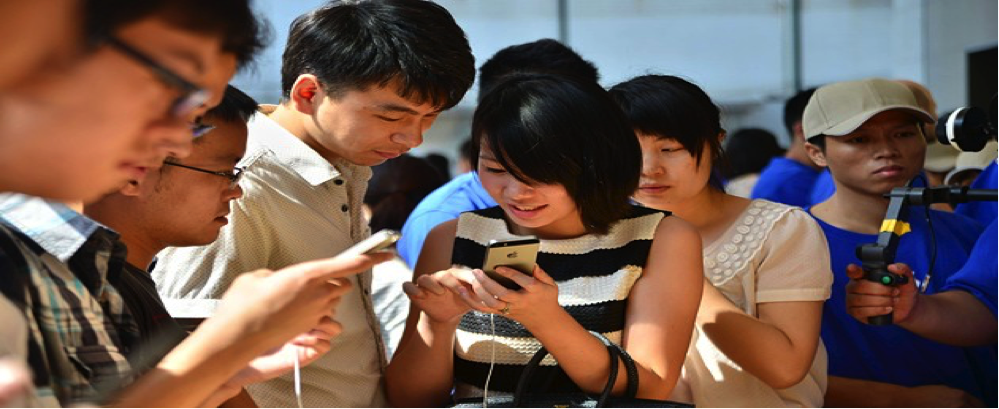
In China, 70% of social media users are under the age of 35, they spend an average of 90 minutes per day on social media and 38% of their consumers make purchases based on recommendations they have read about on social media. It is crucial to engage these users whenever and wherever possible.

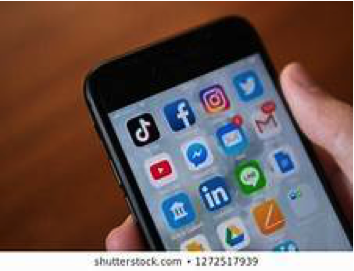
Imagine, just for a minute that there is a platform that can do just about everything Facebook, Instagram, Twitter, Snapchat, and Ebay can do combined. 

Do you find that hard to believe? Well, there is such an app.

Weixin, (pronounced way-shin) is the Chinese social networking app that offers just that. The app allows users to send messages, get news, share photos, and order a cab all from their mobile phone; and all on just one app!  

But, why not just use Facebook, Instagram, Twitter and all of the other platforms that most of us use on a daily basis? 

Because, since 2009 Facebook, Twitter, Instagram and most of the other social media sites are banned in China! In fact, the censorship is so bad it has been nicknamed “The Great Firewall of China!”

The government maintains control over what Internet content is available to the people and any content that is allowed is monitored. This in itself makes it difficult for Chinese social media platforms to expand beyond China (Davison, 2012.) 

What is Weixin?

Image courtesy of seeklogo.net

Weixin is an all-in-one social media platform that was first introduced in China in 2011. By 2014, Weixin had over 300 million users; and as of September of 2018 had over 1.08 billion users (Barboza, 2014).  The Weixin (also referred to as “We Chat”) penetration rate is 85.5% and it boasts 619 million daily active users (China, 2019.) Weixin’s social media parent company, Ten Cent was worth over $100 billion in 2014.

Weixin is more than a messaging and social media app, it is a lifestyle for its’ users.  Users can chat, make phone calls, play games and make mobile payments through Weixin payments. In fact, users can even book a taxi without ever leaving the app.  Weixin aims to integrate itself into the daily lives of its’ users and make using it a habit.

How Does It Work?            

Image courtesy of zzoob.com

China’s largest social media network is so successful because they identified their customer’s needs and offered a product that solved these problems. 

  • They targeted young, urban smartphone users
  • They made the app easy to use and convenient for the users.  In fact, it is so simple to use Weixin promotes that “if you have one minute,”  you can open a store on Weixin.
  • Weixen enhances the users’ self-efficacy
  • Users rarely need to leave the app to open a mobile browser
  • Tailored the campaign to its’ audiences needs and interests
https://www.marketingtochina.com/wp-content/uploads/     

“One big takeaway from the success of Weixin is that you should make your social media product a part of your audiences’ everyday routine and habit”  – Mahoney, 2017

Social Media Success: What is the Key? 

The key to success of any social media campaign is to know your audience! 

In other words, your campaign needs to fit your audience’s needs and satisfy their wants. You need to:

  • Gather basic demographics about your audience and choose the right platforms
  • Conduct an in-depth analysis- give them what they are looking for
  • Make the campaign easy to navigate and make it simple
  • Use special occasions to develop your social media campaign- MAKE IT EXCITING!

Gift Giving…Done!

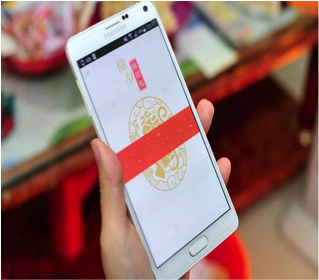
Weixin continues to add new functions to fit the needs of their audience. The “Red Envelope” campaign is one example of how to create excitement over a campaign. During the holidays, a part of Chinese culture includes giving a money gift to family and friends, known as Red Envelope. Weixin launched an app allowing users to link their bank account and send virtual “Red Envelopes” to their recipients. To add extra excitement, Weixin added an element that randomly assigns the amount in each envelope to each recipient. No more agonizing and prioritizing how to divvy up the cash during the holiday, Weixin does it for you!  In 2014, almost 20 million red envelopes were sent!  

Key Takeaways

The fact that our mobile devices are always with us, no matter where we are makes it easy for Weixin to integrate itself into peoples every day life.  They have made it easy for users to get everything they want from one platform. 

While the Chinese have embraced Weixin, the challenges of success in other countries, such as the United States would be an uphill climb.  

By the time Weixin was launched internationally, we were already using established social media platforms and most of us weren’t willing to switch to a newcomer.

Here in the U.S. we like to have choices, and these choices include what platforms we want to use for our social media. I know I am not ready to change until something new comes along that absolutely blows me away. 

How about you?

Jeff

References:

Barboza, D. (2014, January 20). A Popular Chinese Social Networking App Blazes Its Own Path. Retrieved July 1, 2019, from https://www.nytimes.com/2014/01/21/technology/a-chinese-social-network-blazes-its-own-path.html

China In An Hour. (n.d.). Retrieved July 7, 2019, from https://www.linkedin.com/pulse/20140410141827-7112729-china-in-an-hour

Davison, N. (2012, December 07). WeChat: The Chinese social media app that has dissidents worried. Retrieved July 7, 2019, from https://www.theguardian.com/world/2012/dec/07/wechat-chinese-social-media-app

Kristina Zucchi, C. (2019, April 30). Why Facebook Is Banned in China & How to Access It. Retrieved July 4, 2019, from https://www.investopedia.com/articles/investing/042915/why-facebook-banned-china.asp

Mahoney, M.L., & Tang, T. (2017). Strategic Social Media: From Marketing to Social Change. West Sussex, UK: Wiley Blackwell

Ten Cent (n.d.) Retreived July 6, 2019 from http://www.tencent.com/en-us/ps/weixin.shtml

Think Before you Pink

By Jeff St. Jean

Published June 20, 2019

I have a personal connection to breast cancer. I also know that I am not alone. It is safe to say that right now you are probably thinking about someone you know who has been diagnosed with this horrible disease.

BreastCancer.org tells us that one in eight women (12%) will develop breast cancer over the course of their lifetime. That’s a staggering fact.  With facts like this, it’s only natural that we want to help, right?

http://nextgenbreastimaging.com/breastCancer.html

For many of us, this is a cause that is near and dear to our hearts.   Of course, we all want to help! Doing the right thing not only helps the cause, but it makes us feel good!

Well, what better way to feel good than by spreading our message using our very own social media community? This activity even has a name…Cyberactivism.

What exactly is Cyberactivism?  

https://www.adhrb.org/2016

“Cyberactivism is the use of the Internet to promote a particular cause or charity” (Mahoney, 2017)

The use of this powerful social media mobilization allows us to share our activism efforts with our friends and followers by asking them to join us in our cause via social media.  What better way to spread the word about breast cancer awareness than to use social media to spread the word?  But, what happens when it goes too far?

October is Breast Cancer Awareness Month.  This is a cause that most people like to support and many memes are generated on social media during this time in an effort to spread awareness about the disease.

One such meme was a post that requested that women update their Facebook status with the color of their bra and no other text other than their first name (example- Donna, blue, Alexa, tan, etc.)   This was designed to confuse men when they logged into Facebook and saw all of these status updates. The idea was to keep them guessing, generate a buzz and in turn garner awareness for breast cancer.

It Didn’t End There…

This was not the only meme like this to spread during Breast Cancer Awareness Month.  For the next few years’ females were asked to change their status according to different themes such as where they “like”  to keep their purse (I like it in the closet, I like it on the chair, etc.) and another was how long it takes to do their hair in minutes followed by the word “inches” (10 inches, 25 inches, etc.)  This was all in the name of raising awareness by inspiring men to ask questions about the status updates.

Does Using This Approach Do Anything To Help The Cause?

ABC News Stock Photo

#WhatIsYourColor

While it certainly encouraged individuals to participate and share the message, would it encourage you “tell all” in an effort to promote Breast Cancer Awareness? Better yet, why would you share this information? 

The problems I see with this campaign being related to Breast Cancer Awareness are many.  They include:

  • The Facebook meme provided no link to Breastcancer.org or the Susan G Komen Foundation as a way to increase awareness, education and donations to the cause.
  • There was no relevance to breast cancer- it was confusing to people who didn’t know about it.
  • They were trying to make the cause “sexy” and “fun.”  There is nothing sexy or fun about breast cancer.  Ask a survivor.
  • Is lack of awareness actually a problem when it comes to breast cancer? Virtually everyone is aware of the pink ribbons and October being Breast Cancer Awareness Month. It seems that during October everything from beer to laundry detergent to professional sports are pinkwashed.  
  • The group that the meme was “targeting” for awareness; men, are actually susceptible to the disease.  In fact, in 2019 there are expected to be 2,670 new cases diagnosed in men.  Keeping men out of the loop isn’t the message we want to be sending.  Even if they do not get cancer themselves, they may end up being a partner, spouse or caregiver to someone who does.
nfl.com

#PinkWash

What Changes Can Be Made to Make a Difference?

Messages need to be tied to real-life experiences. A mobilization action plan can provide ways to entice your audience to become participants and stimulate behavior change.  You need to provide resources so they can make informed decisions, treat them like an informed public, and prompt participation through social media. Ways to make changes can be:

  • Volunteering time and/or rides to accompany a patient receiving chemo treatments
  • Donating money to a cause or charity supporting breast cancer research
  • Donate your hair to make a wig for a chemo patient
  • Volunteer to sit on a board or foundation that supports breast cancer research 
  • Join a fundraising walk

Cyberactivism needs to go beyond awareness in order to be effective.  The messages need to support the organizations goals. By allowing your audience to generate user content and allowing them to be a part of the process you can transform them into brand advocates.

As I stated at the beginning of my blog today, I have a personal connection to breast cancer.  My inspiration for this blog is my cousin, Joan.  She was recently diagnosed with breast cancer and is currently undergoing chemo treatments, before having surgery this fall. She is one strong woman and I am so proud of her!

Photo courtesy of Joan Lysik Used with permission

#Round2

#StrongerThanThis

Jeff St. Jean is a marketing grad student with a focus on digital marketing and a social media enthusiast. He is an avid traveler as well as on-line shopper who likes to find non-traditional ways to make his purchases and book his travel experiences.

References:

Community, F. (2012, July 11). Tweets (And More) Of The Week: Bras Gone Viral. Retrieved June 22, 2019, from https://www.forbes.com/2010/01/08/breast-cancer-awareness-facebook-forbes-woman-well-being-bra-color.html#6592872c7463

Mahoney, L. M., & Tang, T. (2017). Strategic Social Media: From Marketing To Social Change(First ed.). Malden, MA: John Wiley & Sons.

Marilisaraccoglobal. (2017, October 09). Pinkwashing breast cancer: Are the pink items you’re buying actually benefiting charity? Retrieved June 23, 2019, from https://globalnews.ca/news/3790022/pinkwashing-breast-cancer-are-the-pink-items-youre-buying-actually-benefiting-charity/

U.S. Breast Cancer Statistics. (2019, February 02). Retrieved June 18, 2019, from https://www.breastcancer.org/symptoms/understand_bc/statistics

Yang, G. (2014, June 09). Guobin Yang. Retrieved June 21, 2019, from http://culturedigitally.org/2014/06/cyber-activism-draft-digitalkeywords/

NEW EYES THROUGH SOCIAL MEDIA

http://www.freevector.com

By Jeff St Jean

Published June 09, 2019

How did Warby Parker use social media to break the mold of the traditional prescription eyeglass market without having a single, physical retail location? 

Social media, that’s how.  Now before you say that will never work, let me give you a little background on the company.

Who exactly is Warby Parker? Warby Parker is a company that was founded in 2010 by four classmates from the Wharton School of Business.  

With only $2500 in seed money, they launched a company that broke the mold on buying prescription eyewear by focusing on online distribution through the use of social media (Warby Parker, 2015).

So, how does it work?

http://www.softwaremonster.info

It’s social media, people!

How exactly did social media technology aid Warby Parker’s alternative business model for selling prescription eyeglasses?

http://www.softwaremonster.info
  • ONLINE DIRECT SELLING.

Warby Parker believed that traditional eyeglasses were too expensive and inconvenient to purchase through traditional methods. By producing their glasses in-house and eliminating showrooms, they are able to drastically reduce the price of prescription eyewear by selling direct to the consumer online.

  • COMMUNICATON VIA SOCIAL MEDIA

But, this model will only work if they can convince customers to buy their eyeglasses online. They use social media to communicate directly with customers, effectively converting them from previous, traditional buying consumers to the Warby Parker online business model.

To do this, WP had to debunk customer’s perceptions that low prices equal cheap glasses. They also needed to convince them that quality prescription eyeglass purchases could be made online.  This is where social media came in.

Through the use of transactional communicationWarby Parker manages to continuously engage their customers. They communicate directly with them on social media platforms. They religiously respond to customer comments that are posted on platforms. They create informative Youtube videos to help customers and encourage their customers to also make videos.

They inspire user-generated content on the media platforms by asking customers to post pictures on Facebook, Instagram and Twitter of themselves wearing the glasses. They want interaction; they crave user-generated content.

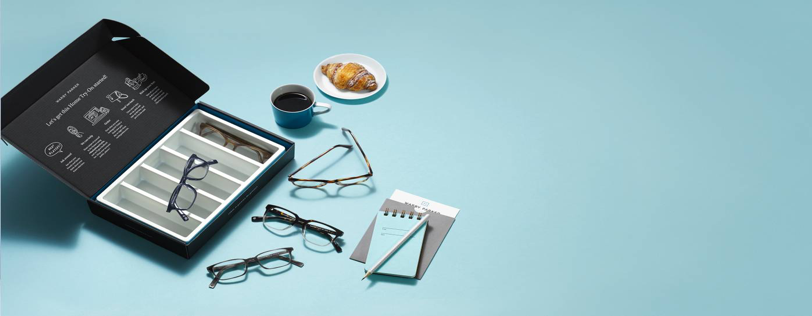
Warby Parker has “Home-Try-On,” a program that allows customers to go online, choose five frames and have them delivered to their home for free.  

This “try before you buy” test-drive allows you to try and ultimately pick the pair or pairs of frames that best suit your needs. The remaining frames are then returned to Warby Parker at no charge to you. What could be better than that?

http://www.warbyparker.com/home-try-on

Share It!

Customers who take this test run are encouraged to share pictures of their purchases to share on their social media accounts.  In effect, they are becoming unofficial influencers for family, friends and others who follow their profiles.

“We’re lucky to have some pretty special customers who use our glasses as a tool to accomplish some pretty great things” – Warby Parker

In perhaps their most exciting use of social media, Warby Parker has introduced  “Virtual Try On.” This proprietary software allows you to utilize the camera in your smart phone to allow you to virtually try on the as many frames as you want.  It even provides for photo sharing, allowing you to get input from your friends and family before you make a purchase.

  • SOCIAL CONSCIOUSNESS

Still aren’t convinced that Warby Parker is “all that” and more? Then maybe their social conscious business strategy will make a believer of you. They have partnered with VisionSpringin an effort to provide glasses to those in need. For every pair of eyeglasses sold, they will donate a pair to charity.  

So, for those of you who have trouble rationalizing the jump from traditional to online eyeglass purchasing, this could be the hook that pulls you in. 

By the way, to date Warby Parker has donated over 500K pairs of glasses to needy recipients (Warby, 2019).

http://www.warbyparker.com

#NoMoreSquinting

http://www.warbyparker.com

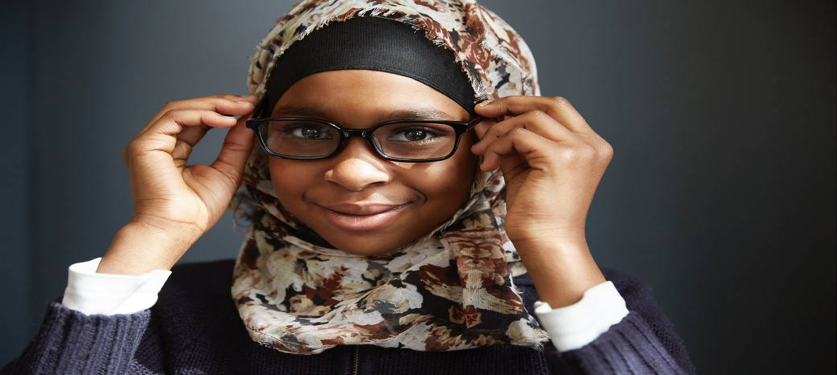
A student in the Bronx wearing his WB eyeglasses 

KEY TAKE-AWAYS FROM THE WARBY PARKER MODEL

Through the use of social media, Warby Parker has transformed and yes, even “disrupted” (Mahoney) the traditional marketplace and media environment. 

What Warby Parker has done is used social media to turn an idea into a 1.2 billion dollar business.  They have used the following key elements of social media marketing to sell their eyeglasses:

  • Mass communication is no longer seen as a “one-to-many” messaging. Target messages are more effective in establishing change in consumer behavior. 

Talk to me, know my name!

  • Businesses can reach out and provide an alternative narrative which can reduce dissonance . Customer’s skepticism can be reduced or removed with offers and ideas that reduce any personal risk. 

Don’t trust the business model? How about free try-on and shipping?

  • The use of social media allows for transactional as opposed to linear messaging. This includes back and forth communication with the customers becoming engaged and sharing their positive experiences with other potential customers. 

Now customers hear from someone they trust about a product, not from a big company with self-promotion at its center.  

#MarketingGenius

#SocialMediaVision


About the Author
Jeff St Jean is a marketing grad student with a focus on digital marketing and a social media enthusiast.  He is an avid traveler as well as on–line shopper who loves to find non-traditional ways to make his purchases and book his travel experiences.

References

Glasses & Prescription Eyeglasses. (n.d.). Retrieved June 11, 2019, from https://www.warbyparker.com

Mahoney, L. M., & Tang, T. (2017). Strategic social media: From marketing to social change. Malden, MA: Wiley Blackwell.